AI News and Guides

Explore the best AI News and Guides — independent reviews, comparisons, pricing and step-by-step how-to guides, curated by Aizhi.

  • Diagnostically acceptable irreversible compression

    Diagnostically acceptable irreversible compression

    Diagnostically acceptable irreversible compression (DAIC) is the amount of lossy compression which can be used on a medical image to produce a result that does not prevent the reader from using the image to make a medical diagnosis. The term was first introduced at a workshop on irreversible compression convened by the European Society of Radiology (ESR) in Palma de Mallorca October 13, 2010, the results of which were reported in a subsequent position paper. == Determination == The "amount of compression" in irreversible compression used to be determined by the compression ratio, where the acceptable minimum is determined by the algorithm (typically JPEG or J2K) and the data type (body part and imaging method). Such a definition is easy to follow, and has been used by medical bodies in 2010 around the world. However, its downside is obvious: the compression ratio tells nothing about the real quality of the image, as different compressors can produce vastly different qualities under the same file size. For example, the JPEG format of 1992 can perform as well as many modern formats given newer techniques exploited in mozjpeg and ISO libjpeg, yet they would be lumped together with the legacy encoders in such a scheme. The image compression community has long used objective quality metrics like SSIM to measure the effects of compression. In the absence of good data regarding SSIM, the ESR review of 2010 concluded that it is still difficult to establish a criterion for whether a particular irreversible compression scheme applied with particular parameters to a particular individual image, or category of images, avoids the introduction of some quantifiable risk of a diagnostic error for any particular diagnostic task. A 2017 study showed that a SSIM variant called 4-G-r (4-component, gradient, structural component of SSIM) best reflects changes in images that affect the decision of radiologists out of 16 SSIM variants. A 2020 study shows that visual information fidelity (VIF), feature similarity index (FSIM), and noise quality metric (NQM) best reflect radiologist preferences out of ten metrics. It also mentions that the original version of SSIM works as poorly as a basic root-mean-square distance (RMSD) for this purpose, a result echoed by the 2017 study. The 4-G-r modification is not tested in the study.

    Read more →
  • Amazon Bedrock

    Amazon Bedrock

    Amazon Bedrock is a cloud computing service provided by Amazon Web Services (AWS) for building generative artificial intelligence applications. Launched in 2023, the platform provides a unified API to access foundation models (FMs) from several AI companies, alongside related tools. Bedrock is a serverless computing service which competes with similar enterprise AI platforms such as Microsoft Foundry and Google Cloud Platform. == History == Amazon announced Bedrock on April 13, 2023. The service became generally available on September 28, 2023. Throughout 2024 and 2025, AWS expanded the service to include AI agents, which allow models to interact with external systems. == Features == Knowledge Bases: a managed workflow for Retrieval-Augmented Generation (RAG), which allows models to pull facts from private data stored in Amazon S3. Guardrails: a security feature that allows administrators to set content filters and personally identifiable information redaction across all models in the platform to increase the safety and compliance of AI deployments. == PartyRock == In November 2023, Amazon launched PartyRock, a web-based no-code environment for building generative AI applications. The platform uses a natural language interface to translate user descriptions into software widgets. These widgets enable specific AI behaviors, including text-based prompts, conversational agents, generating images, and the summarization and querying of user-uploaded documents. Although it initially launched with a limited-time free trial, AWS transitioned the service to a recurring free daily usage credit model in early 2025.

    Read more →
  • Jake Elwes

    Jake Elwes

    Jake Elwes () is a British media artist, hacker and researcher. Their practice is the exploration of artificial intelligence (AI), queer theory and technical biases. They are known for using AI to create art in mediums such as video, performance and installation. Elwes considers themselves to be neuroqueer, and their work on queering technology addresses issues caused by the normative biases of artificial intelligence. == Education and early life == Elwes was born in London to British contemporary artist and painter Luke Elwes and Anneke, daughter of Hans Dumoulin. Elwes is the great grandchild of Army officer James Hennessy and portrait painter Simon Elwes RA, son of Victorian opera singer Gervase Elwes. Elwes studied at the Slade School of Fine Art from 2013 to 2017, where they began using computer code as a medium. In 2016 they attended the School of Machines, Making & Make-Believe in Berlin with artist and educator Gene Kogan. Elwes was introduced to drag performance by their collaborator Dr Joe Parslow who holds a PhD in drag performance. Drag performance has since become instrumental to Elwes' work. == Career == Elwes' work with artificial intelligence is cited as a hopeful strategy to make AI more playful and diverse. Elwes' work has been exhibited in numerous international art museums and galleries and was featured in a BBC documentary on the history of video art, they were a 2021 finalist for the Lumen Prize, and received the Honorary Mention of the 2022 Prix Ars Electronica in the Interactive Art + category. They also curated and presented the opening provocation "The New Real - Artistic and Queer Visions of AI Futures" to the UK government with two drag artists at the AI UK conference 2024. Elwes is part of the Radical Faeries countercultural movement. They have exhibited in museums and galleries across Europe and Asia including: Victoria and Albert Museum (London, UK) - The Zizi Show (2023-2024) for the first digital commission in their photography center's digital gallery Pinakothek der Moderne (Munich, Germany) - Glitch. Die Kunst Der Störung (2023-2024) ZKM (Karlsruhe, Germany) - Biomedia (2021-2022) National Museum of Modern and Contemporary Art (Cheongju, South Korea) - What an Artificial World (2024) Somerset House (London, UK) - The Horror Show! (2022-2023) Gazelli Art House (London, UK) - Jake Elwes: Data • Glitch • Utopia (2023) (survey exhibition) Jut Art Museum (Taipei, Taiwan) - Future Lives, Future You (2023-2024) Max Ernst Museum (Brühl, Germany) - Surreal Futures (2023-2024) Zabludowicz Collection (London, UK) - Among the Machines (2022) Ars Electronica (Linz, Austria) - Prix Ars Electronica, CyberArts Exhibition (2022) Institute of Contemporary Arts (ICA) (London, UK) - Do Androids Dream on Silver Screens? (2023) Arebyte gallery (London, UK) - Real-Time Constraints (2020) Ming Contemporary Art Museum (McaM) (Shanghai, China) - Mind the Deep (2019) HMKV (Hartware MedienKunstVerein) (Dortmund, Germany) - House of Mirrors: Artificial Intelligence as Phantasm (2022) Today Art Museum (Beijing, China) - Future of Today: DEJA VU (2019) Science Gallery (Dublin, Ireland) - BIAS (2021-2022) Yuz Museum (Shanghai, China) - Lying Sophia and Mocking Alexa (2021) Fotomuseum Winterthur The Onassis Foundation (Athens, Greece) - You and AI (2021) Royal College of Art (London, UK) - Event Two (2019) (50th anniversary of Computer Arts Society & Event One) Museum für Naturkunde (Berlin, Germany) - Forschungsfall Nachtigall (2019) Frankfurter Kunstverein (Frankfurt, Germany) - I am here to learn (2018) Nature Morte (Delhi, India) - Gradient Descent (2018) BALTIC Centre for Contemporary Art (Newcastle, UK) - Bloomberg New Contemporaries (2017) == Artworks == === The Zizi Project - a deepfake drag cabaret === The Zizi Project is a series of works that explore the interaction of drag and A.I. Currently, The Zizi Project is made up of multiple artworks. ==== Zizi - Queering the Dataset (2019) ==== Knowing that facial recognition technology statically struggle to recognize black women or transgender people, Elwes set out to "Queer the Dataset" through an open-sourced generative adversarial network (GAN, a type of machine learning model and an early Generative artificial intelligence). Elwes added a dataset of 1,000 photos of drag kings and queens into the GAN's 70,000 faces collected in a standardised facial recognition dataset called Flickr-Faces-HQ Dataset (FFHQ). They then created new simulacra faces, known as deep fakes. "We queer that data so it shifts all of the weights in this neural network from a space of normativity into a space of queerness and otherness. Suddenly all of the faces start to break down and you see mascara dissolve into lipstick and blue eye shadow turn into a pink wig" said Elwes in a 2023 interview for Artnet. ==== Zizi & Me (2020–2023) ==== Zizi & Me is an ongoing multimedia collaboration between drag queen Me The Drag Queen and a deepfake A.I. clone of Me The Drag Queen. Using neural networks trained on filmed footage, the project creates a virtual body that can mimic reference movements. The first act, which features a digital lip-sync duet to Anything You Can Do (I Can Do Better), satirises the idea of A.I. being mistaken for a human, using drag performance and cabaret to critique societal narratives about A.I. and its role in shaping identity. The project is part of The Zizi Project by Jake Elwes, which explores the intersection of drag performance and A.I. ==== The Zizi Show - A Deepfake Drag Cabaret (2020) ==== The Zizi Show is a deep fake drag act based on artificial intelligence (AI). It has been presented live and as interactive online artwork. It is an exploration of queer culture and the algorithms philosophy and ethics of AI. The Zizi Show was exhibited as the inaugural exhibition in the digital gallery at the V&A’s Photography Center from 2023 to 2024. ==== Zizi in Motion: A Deepfake Drag Utopia (Movement by Wet Mess) (2023) ==== "Zizi in Motion" is a multichannel silent video installation featuring AI-generated deepfake performances, which are dynamically re-animated through the movements of London drag artist Wet Mess. The movements of Wet Mess cause the AI-generated visuals to glitch and distort, showcasing the interaction between drag performance and artificial intelligence. The work explore the potential for queer communities to ethically and creatively reclaim and repurpose deepfake technology, using it to celebrate queer bodies and identities. === Art in the Cage of Digital Reproduction (2024) === In an act of protest on 26 November 2024, Elwes facilitated indirect access to an early access token for OpenAI’s Sora text-to-video model through a Hugging Face frontend under the account "PR Puppets". The accompanying statement called to 'denormalize the exploitation of artists by major AI companies for training data, R&D, and publicity'. The incident attracted international press coverage calling into question the role of artists in shaping the future of generative AI versus merely serving as data and credibility providers for tech giants. Elwes also coordinated a collection of mini essays with responses and reflections from the signees and guest writers titled "Art in the Cage of Digital Reproduction". === Installations exploring interpretation and feedback loops between neural networks === Elwes has created works based on the interpretations and misinterpretations between different neural networks and training datasets including: A.I. Interprets A.I. Interpreting ‘Against Interpretation’ (Sontag 1966) from 2023, Closed Loop from 2017, and Auto-Encoded Buddha from 2016. ==== A.I. Interprets A.I. Interpreting ‘Against Interpretation’ (Sontag 1966) (2023) ==== A.I. Interprets A.I. Interpreting ‘Against Interpretation (Sontag 1966) is a three-channel video artwork where an AI interprets Susan Sontag’s essay into images, and then and another AI reinterprets those images back into language. The piece highlights how AI-generated art can misinterpret and introduce bias. ==== Closed Loop (2017) ==== Closed Loop is a two-channel video where two neural networks engage in a continuous feedback loop, one generating images based on the text output and the other creating text based on the image output. The work explores how AI models misinterpret and evolve in a surreal, self-perpetuating conversation, without human input. ==== Auto-Encoded Buddha (2016) ==== Auto-Encoded Buddha is a mixed-media piece where an AI attempts to generate an image of a Buddha statue, trained on 5,000 Buddha images. The AI struggles to accurately represent the Buddha, highlighting the limitations of early generative neural networks. The work is a tribute to Nam June Paik’s TV Buddha (1974). === CUSP (2019) === In their video work CUSP (2019) Elwes places marsh birds generated using artificial intelligence into a tidal landscape. These digitally generated and constantly shifting birds are recorded in dialogue with native

    Read more →
  • Deep learning speech synthesis

    Deep learning speech synthesis

    Deep learning speech synthesis refers to the application of deep learning models to generate natural-sounding human speech from written text (text-to-speech) or spectrum (vocoder). Deep neural networks are trained using large amounts of recorded speech and, in the case of a text-to-speech system, the associated labels and/or input text. == Formulation == Given an input text or some sequence of linguistic units Y {\displaystyle Y} , the target speech X {\displaystyle X} can be derived by X = arg ⁡ max P ( X | Y , θ ) {\displaystyle X=\arg \max P(X|Y,\theta )} where θ {\displaystyle \theta } is the set of model parameters. Typically, the input text will first be passed to an acoustic feature generator, then the acoustic features are passed to the neural vocoder. For the acoustic feature generator, the loss function is typically L1 loss (Mean Absolute Error, MAE) or L2 loss (Mean Square Error, MSE). These loss functions impose a constraint that the output acoustic feature distributions must be Gaussian or Laplacian. In practice, since the human voice band ranges from approximately 300 to 4000 Hz, the loss function will be designed to have more penalty on this range: l o s s = α loss human + ( 1 − α ) loss other {\displaystyle loss=\alpha {\text{loss}}_{\text{human}}+(1-\alpha ){\text{loss}}_{\text{other}}} where loss human {\displaystyle {\text{loss}}_{\text{human}}} is the loss from human voice band and α {\displaystyle \alpha } is a scalar, typically around 0.5. The acoustic feature is typically a spectrogram or Mel scale. These features capture the time-frequency relation of the speech signal, and thus are sufficient to generate intelligent outputs. The Mel-frequency cepstrum feature used in the speech recognition task is not suitable for speech synthesis, as it reduces too much information. == History == In September 2016, DeepMind released WaveNet, which demonstrated that deep learning-based models are capable of modeling raw waveforms and generating speech from acoustic features like spectrograms or mel-spectrograms. Although WaveNet was initially considered to be computationally expensive and slow to be used in consumer products at the time, a year after its release, DeepMind unveiled a modified version of WaveNet known as "Parallel WaveNet," a production model 1,000 faster than the original. This was followed by Google AI's Tacotron 2 in 2018, which demonstrated that neural networks could produce highly natural speech synthesis but required substantial training data—typically tens of hours of audio—to achieve acceptable quality. Tacotron 2 used an autoencoder architecture with attention mechanisms to convert input text into mel-spectrograms, which were then converted to waveforms using a separate neural vocoder. When trained on smaller datasets, such as 2 hours of speech, the output quality degraded while still being able to maintain intelligible speech, and with just 24 minutes of training data, Tacotron 2 failed to produce intelligible speech. In 2019, Microsoft Research introduced FastSpeech, which addressed speed limitations in autoregressive models like Tacotron 2. FastSpeech utilized a non-autoregressive architecture that enabled parallel sequence generation, significantly reducing inference time while maintaining audio quality. Its feedforward transformer network with length regulation allowed for one-shot prediction of the full mel-spectrogram sequence, avoiding the sequential dependencies that bottlenecked previous approaches. The same year saw the release of HiFi-GAN, a generative adversarial network (GAN)-based vocoder that improved the efficiency of waveform generation while producing high-fidelity speech. In 2020, the release of Glow-TTS introduced a flow-based approach that allowed for fast inference and voice style transfer capabilities. In March 2020, the free text-to-speech website 15.ai was launched. 15.ai gained widespread international attention in early 2021 for its ability to synthesize emotionally expressive speech of fictional characters from popular media with minimal amount of data. The creator of 15.ai (known pseudonymously as 15) stated that 15 seconds of training data is sufficient to perfectly clone a person's voice (hence its name, "15.ai"), a significant reduction from the previously known data requirement of tens of hours. 15.ai is credited as the first platform to popularize AI voice cloning in memes and content creation. 15.ai used a multi-speaker model that enabled simultaneous training of multiple voices and emotions, implemented sentiment analysis using DeepMoji, and supported precise pronunciation control via ARPABET. The 15-second data efficiency benchmark was later corroborated by OpenAI in 2024. == Semi-supervised learning == Currently, self-supervised learning has gained much attention through better use of unlabelled data. Research has shown that, with the aid of self-supervised loss, the need for paired data decreases. == Zero-shot speaker adaptation == Zero-shot speaker adaptation is promising because a single model can generate speech with various speaker styles and characteristic. In June 2018, Google proposed to use pre-trained speaker verification models as speaker encoders to extract speaker embeddings. The speaker encoders then become part of the neural text-to-speech models, so that it can determine the style and characteristics of the output speech. This procedure has shown the community that it is possible to use only a single model to generate speech with multiple styles. == Neural vocoder == In deep learning-based speech synthesis, neural vocoders play an important role in generating high-quality speech from acoustic features. The WaveNet model proposed in 2016 achieves excellent performance on speech quality. Wavenet factorised the joint probability of a waveform x = { x 1 , . . . , x T } {\displaystyle \mathbf {x} =\{x_{1},...,x_{T}\}} as a product of conditional probabilities as follows p θ ( x ) = ∏ t = 1 T p ( x t | x 1 , . . . , x t − 1 ) {\displaystyle p_{\theta }(\mathbf {x} )=\prod _{t=1}^{T}p(x_{t}|x_{1},...,x_{t-1})} where θ {\displaystyle \theta } is the model parameter including many dilated convolution layers. Thus, each audio sample x t {\displaystyle x_{t}} is conditioned on the samples at all previous timesteps. However, the auto-regressive nature of WaveNet makes the inference process dramatically slow. To solve this problem, Parallel WaveNet was proposed. Parallel WaveNet is an inverse autoregressive flow-based model which is trained by knowledge distillation with a pre-trained teacher WaveNet model. Since such inverse autoregressive flow-based models are non-auto-regressive when performing inference, the inference speed is faster than real-time. Meanwhile, Nvidia proposed a flow-based WaveGlow model, which can also generate speech faster than real-time. However, despite the high inference speed, parallel WaveNet has the limitation of needing a pre-trained WaveNet model, so that WaveGlow takes many weeks to converge with limited computing devices. This issue has been solved by Parallel WaveGAN, which learns to produce speech through multi-resolution spectral loss and GAN learning strategies.

    Read more →
  • Semantic neural network

    Semantic neural network

    Semantic neural network (SNN) is based on John von Neumann's neural network [von Neumann, 1966] and Nikolai Amosov M-Network. There are limitations to a link topology for the von Neumann’s network but SNN accept a case without these limitations. Only logical values can be processed, but SNN accept that fuzzy values can be processed too. All neurons into the von Neumann network are synchronized by tacts. For further use of self-synchronizing circuit technique SNN accepts neurons can be self-running or synchronized. In contrast to the von Neumann network there are no limitations for topology of neurons for semantic networks. It leads to the impossibility of relative addressing of neurons as it was done by von Neumann. In this case an absolute readdressing should be used. Every neuron should have a unique identifier that would provide a direct access to another neuron. Of course, neurons interacting by axons-dendrites should have each other's identifiers. An absolute readdressing can be modulated by using neuron specificity as it was realized for biological neural networks. There’s no description for self-reflectiveness and self-modification abilities into the initial description of semantic networks [Dudar Z.V., Shuklin D.E., 2000]. But in [Shuklin D.E. 2004] a conclusion had been drawn about the necessity of introspection and self-modification abilities in the system. For maintenance of these abilities a concept of pointer to neuron is provided. Pointers represent virtual connections between neurons. In this model, bodies and signals transferring through the neurons connections represent a physical body, and virtual connections between neurons are representing an astral body. It is proposed to create models of artificial neuron networks on the basis of virtual machine supporting the opportunity for paranormal effects. SNN is generally used for natural language processing. == Related models == Computational creativity Semantic hashing Semantic Pointer Architecture Sparse distributed memory

    Read more →
  • Torment: Tides of Numenera

    Torment: Tides of Numenera

    Torment: Tides of Numenera is a 2017 role-playing video game developed by inXile Entertainment and published by Techland Publishing for Microsoft Windows, macOS, Linux, PlayStation 4 and Xbox One. It is a spiritual successor to 1999's Planescape: Torment. The game takes place in The Ninth World, a science fantasy campaign setting written by Monte Cook for his tabletop RPG Numenera. Torment: Tides of Numenera, like its predecessor, is primarily story-driven while placing greater emphasis on interaction with the world and characters, with combat and item accumulation taking a secondary role. The game was crowd-funded through Kickstarter in March 2013. At the campaign's conclusion, Torment: Tides of Numenera had set the record for highest-funded video game on Kickstarter with over US$4 million pledged. The release date was initially set for December 2014, but was pushed back to February 2017. == Gameplay == Torment: Tides of Numenera uses the Unity engine to display the pre-rendered 2.5D isometric perspective environments. The tabletop ruleset of Monte Cook's Numenera has been adapted to serve as the game's rule mechanic, and its Ninth World setting is where the events of Torment: Tides of Numenera take place. The player experiences the game from the point of view of the Last Castoff, a human host that was once inhabited by a powerful being, but was suddenly abandoned without memory of prior events. As with its spiritual predecessor, Planescape: Torment, the gameplay of Torment: Tides of Numenera places a large emphasis on storytelling, which unfolds through a "rich, personal narrative", and complex character interaction through the familiar dialog tree system. The player is able to select the gender of the protagonist, who will otherwise start the game as a "blank slate", and may develop his or her skills and personality from their interactions with the world. The Numenera setting provides three base character classes: Glaive (warrior), Nano (wizard) and Jack (rogue). These classes can be further customized with a number of descriptors (such as "Tough" or "Mystical") and foci, which allow the character to excel in a certain role or combat style. Instead of a classic alignment system acting as a character's ethical and moral compass, Torment: Tides of Numenera uses "Tides" to represent the reactions a person inspires in their peers. Each Tide has a specific color and embodies a number of nuanced concepts that are associated with it. The composition of Tides a character has manipulated the most determines their Legacy, which roughly describes the way they have taken in life. Different Legacies may affect what bonuses and powers certain weapons and relics provide, as well as give a character special abilities and enhance certain skills. == Synopsis == === Setting === Tides of Numenera has a science fantasy setting. In the far future (one billion years), the rise and fall of countless civilizations have left Earth in a roughly medieval state, with most of humanity living in simple settlements, surrounded by technological relics of the mysterious past. The current age is called the "Ninth World" by its scholars, who believe that eight great ages existed and were destroyed, disappeared or left the Earth for unknown reasons before the present day, leaving ruins and various oddities and artifacts behind. These artifacts are known as the "numenera" and represent what is left of the science and technology of these past civilizations. Many of them are irreparably broken, but some are still able to function in ways that are beyond the level of understanding of most humans, who believe these objects to be magical in nature. === Characters === Character complexity and dialogue depth were identified among the primary elements of the Planescape: Torment legacy to be preserved and refined by the developers of Torment: Tides of Numenera. The tormented nature of the game's protagonist, the Last Castoff, attracts other, similarly affected people. They will play a significant role in his or her story as friends and companions, or as powerful enemies. The game contains seven companions in total: Aligern, Callistege, Erritis, Matkina, Oom, Tybir, and Rhin. === Plot === The protagonist of the story, known as the Last Castoff, is the final vessel for the consciousness of an ancient man, who managed to find a way to leave his physical body and be reborn in a new one, thus achieving a kind of immortality by means of the relics. The actions of this man, known as the Changing God to some, attracted the enmity of "The Sorrow" (renamed from "The Angel of Entropy" to reduce the potential to imply a religious role), who now seeks to destroy him and his creations. The Last Castoff, being one such "creation", is also targeted by the Sorrow, and must find their master before both are undone. To do so, the protagonist must explore the Ninth World, discovering other castoffs, making friends and enemies along the way. One means of such exploration are the "Meres" – artifacts that let their user gain control over the lives of other castoffs, and experience different worlds or dimensions through them. Through these travels the Last Castoff will leave their mark on the world – their Legacy – and will find an answer to the fundamental question of the story: What does one life matter? While the overall story varies wildly depending on personal preferences and specific interactions, the central storyline follows the Last Castoff as they search for a way to defeat or escape the Sorrow. They explore Sagus Cliffs after falling from a great height into a domed structure, destroying an artifact known as a resonance chamber that is believed to be capable saving the Last Castoff from the Sorrow. Finding another castoff, Matkina, The Last uses a Mere, a repository of memory to locate the entrance to Sanctuary. Using the Mere also alters the past, allowing Matkina to be healed of her mental damage. The Last finds Sanctuary, which the Changing God created as a hiding place from the Sorrow, where the Last finds a number of castoffs who represent both sides of the Eternal War: a conflict between followers of the Changing God, and followers of the First Castoff, who believe the God is selfish and malevolent. The Sorrow breaches Sanctuary after the Last is told that the resonance chamber will "defeat" the Sorrow by destroying every castoff in existence. After escaping the Sorrow through a portal to the Bloom, an apparition appears claiming to be the actual Changing God and attempts to possess the Last by force of will. == Development == In a 2007 interview, designers Chris Avellone and Colin McComb, who had worked on Planescape: Torment, stated that although a direct sequel was not considered because the game's story was over, they were open to the idea of a similar-themed Planescape game if they could gather most of the original development team and find an "understanding set of investors". This combination was deemed infeasible at the time. Talks about creating a sequel with the help of a crowd funding platform resumed in 2012, but attempts to acquire a Planescape license from Wizards of the Coast failed. Later that year, Colin McComb joined inXile, which was at the time working on its successfully crowd funded Wasteland 2 project. The studio gained the rights to the Torment title shortly thereafter. In January 2013, inXile's CEO Brian Fargo announced that the spiritual successor to Planescape: Torment was in pre-production and would be set in the Numenera RPG universe created by Monte Cook. Cook acted as one of the designers of the Planescape setting, and Fargo saw the Numenera setting as the natural place to continue the themes of the previous Torment title. Although the connections to its predecessor will not be relatively overt, due to licensing issues, it was noted that certain traditional RPG elements are relatively hard to copyright, and some elements of Planescape: Torment may make a reappearance. Development of the game began shortly after the acquisition of the Torment license, and various inXile staff will transition over to the Numenera team as production on Wasteland 2 winds down. In late January 2013, inXile confirmed the game's title as Torment: Tides of Numenera, and announced that Planescape: Torment composer Mark Morgan would create the soundtrack. The pre-production period was initially expected to continue until October 2013. During this phase, team composition for the project was to be finalised and development would focus on production planning, game design and dialog writing. With the Wasteland 2 project facing delays in 2014, full production of Torment: Tides of Numenera was rescheduled to a later date. A Kickstarter campaign to crowd fund Torment: Tides of Numenera was launched on March 6, 2013 with a US$900,000 goal. Project director Kevin Saunders explained this choice of a funding source by stating that the traditional publisher-based funding model is flawed

    Read more →
  • Computational law

    Computational law

    Computational law is the branch of legal informatics concerned with the automation of legal reasoning. What distinguishes Computational Law systems from other instances of legal technology is their autonomy, i.e. the ability to answer legal questions without additional input from human legal experts. While there are many possible applications of Computational Law, the primary focus of work in the field today is compliance management, i.e. the development and deployment of computer systems capable of assessing, facilitating, or enforcing compliance with rules and regulations. Some systems of this sort already exist. TurboTax is a good example. And the potential is particularly significant now due to recent technological advances – including the prevalence of the Internet in human interaction and the proliferation of embedded computer systems (such as smart phones, self-driving cars, and robots). There are also applications that do not involve governmental laws. The regulations can just as well be the terms of contracts (e.g. delivery schedules, insurance covenants, real estate transactions, financial agreements). They can be the policies of corporations (e.g. constraints on travel, expenditure reporting, pricing rules). They can even be the rules of games (embodied in computer game playing systems). == History == Speculation about potential benefits to legal practice through applying methods from computational science and AI research to automate parts of the law date back at least to the middle 1940s. Further, AI and law and computational law do not seem easily separable, as perhaps most of AI research focusing on the law and its automation appears to utilize computational methods. The forms that speculation took are multiple and not all related in ways to readily show closeness to one another. This history will sketch them as they were, attempting to show relationships where they can be found to have existed. By 1949, a minor academic field aiming to incorporate electronic and computational methods to legal problems had been founded by American legal scholars, called jurimetrics. Though broadly said to be concerned with the application of the "methods of science" to the law, these methods were actually of a quite specifically defined scope. Jurimetrics was to be "concerned with such matters as the quantitative analysis of judicial behavior, the application of communication and information theory to legal expression, the use of mathematical logic in law, the retrieval of legal data by electronic and mechanical means, and the formulation of a calculus of legal predictability". These interests led in 1959 to the founding a journal, Modern Uses of Logic in Law, as a forum wherein articles would be published about the applications of techniques such as mathematical logic, engineering, statistics, etc. to the legal study and development. In 1966, this Journal was renamed as Jurimetrics. Today, however, the journal and meaning of jurimetrics seems to have broadened far beyond what would fit under the areas of applications of computers and computational methods to law. Today the journal not only publishes articles on such practices as found in computational law, but has broadened jurimetrical concerns to mean also things like the use of social science in law or the "policy implications [of] and legislative and administrative control of science". Independently in 1958, at the Conference for the Mechanization of Thought held at the National Physical Laboratory in Teddington, Middlesex, UK, the French jurist Lucien Mehl presented a paper both on the benefits of using computational methods for law and on the potential means to use such methods to automate law for a discussion that included AI luminaries like Marvin Minsky. Mehl believed that the law could by automated by two basic distinct, though not wholly separable, types of machine. These were the "documentary or information machine", which would provide the legal researcher quick access to relevant case precedents and legal scholarship, and the "consultation machine", which would be "capable of answering any question put to it over a vast field of law". The latter type of machine would be able to basically do much of a lawyer's job by simply giving the "exact answer to a [legal] problem put to it". By 1970, Mehl's first type of machine, one that would be able to retrieve information, had been accomplished but there seems to have been little consideration of further fruitful intersections between AI and legal research. There were, however, still hopes that computers could model the lawyer's thought processes through computational methods and then apply that capacity to solve legal problems, thus automating and improving legal services via increased efficiency as well as shedding light on the nature of legal reasoning. By the late 1970s, computer science and the affordability of computer technology had progressed enough that the retrieval of "legal data by electronic and mechanical means" had been achieved by machines fitting Mehl's first type and were in common use in American law firms. During this time, research focused on improving the goals of the early 1970s occurred, with programs like Taxman being worked on in order to both bring useful computer technology into the law as practical aids and to help specify the exact nature of legal concepts. Nonetheless, progress on the second type of machine, one that would more fully automate the law, remained relatively inert. Research into machines that could answer questions in the way that Mehl's consultation machine would picked up somewhat in the late 1970s and 1980s. A 1979 convention in Swansea, Wales marked the first international effort solely to focus upon applying artificial intelligence research to legal problems in order to "consider how computers can be used to discover and apply the legal norms embedded within the written sources of the law". Considerable progress on the development of the second type of machine was made in the following decade, with the development of a variety of expert systems. According to Thorne McCarty, "these systems all have the following characteristics: They do backward chaining inference from a specified goal; they ask questions to elicit information from the user; and they produce a suggested answer along with a trace of the supporting legal rules." According to Prakken and Sartor the representation of the British Nationality Act as a logic program, which introduced this approach, was "hugely influential for the development of computational representations of legislation, showing how logic programming enables intuitively appealing representations that can be directly deployed to generate automatic inferences". In 2021, this work received the Inaugural CodeX Prize as "one of the first and best-known works in computational law, and one of the most widely cited papers in the field." In a 1988 review of Anne Gardner's book An Artificial Intelligence Approach to Legal Reasoning (1987), the Harvard academic legal scholar and computer scientist Edwina Rissland wrote that "She plays, in part, the role of pioneer; artificial intelligence ("AI") techniques have not yet been widely applied to perform legal tasks. Therefore, Gardner, and this review, first describe and define the field, then demonstrate a working model in the domain of contract offer and acceptance." Eight years after the Swansea conference had passed, and still AI and law researchers merely trying to delineate the field could be described by their own kind as "pioneer[s]". In the 1990s and early 2000s more progress occurred. Computational research generated insights for law. The First International Conference on AI and the Law occurred in 1987, but it is in the 1990s and 2000s that the biannual conference began to build up steam and to delve more deeply into the issues involved with work intersecting computational methods, AI, and law. Classes began to be taught to undergraduates on the uses of computational methods to automating, understanding, and obeying the law. Further, by 2005, a team largely composed of Stanford computer scientists from the Stanford Logic group had devoted themselves to studying the uses of computational techniques to the law. Computational methods in fact advanced enough that members of the legal profession began in the 2000s to both analyze, predict and worry about the potential future of computational law and a new academic field of computational legal studies seems to be now well established. As insight into what such scholars see in the law's future due in part to computational law, here is quote from a recent conference about the "New Normal" for the legal profession: "Over the last 5 years, in the fallout of the Great Recession, the legal profession has entered the era of the New Normal. Notably, a series of forces related to technological change, globalization, and the pressure to do more with less (in both corpo

    Read more →
  • DialogOS

    DialogOS

    DialogOS is a graphical programming environment to design computer system which can converse through voice with the user. Dialogs are clicked together in a Flowchart. DialogOS includes bindings to control Lego Mindstorms robots by voice and has bindings to SQL databases, as well as a generic plugin architecture to integrate with other types of backends. DialogOS is used in computer science courses in schools and universities to teach programming and to introduce beginners in the basic principles of human/computer interaction and dialog design. It has also been used in research systems. DialogOS was initially developed commercially by CLT Sprachtechnologie GmbH until its liquidation in 2017. The rights were then acquired by Saarland University and the software was released as open-source. == Bindings to Lego Mindstorms NXT == DialogOS can control the LEGO Mindstorms NXT Series. It uses sensor-nodes to obtain values for the following sensors: noise sensor ultrasonic sensor touch sensor luminosity sensor

    Read more →
  • SimSimi

    SimSimi

    SimSimi is an artificial intelligence conversation program created in 2002 by ISMaker. It grows its artificial intelligence day by day assisted by a feature that allows users to teach it to respond correctly. SimSimi, pronounced as "shim-shimi", is from a Korean word simsim (심심) which means "bored". It has an application designed for Android, Windows Phone and iOS. The application was banned in Thailand in 2012 after users taught it to make responses containing profanity, and to criticise leading politicians. In April 2018, SimSimi was suspended in Brazil due to accusations of sending inappropriate messages, such as sexual language, bullying and even death threats, being labeled as "dangerous" mainly due to its popularity among children, and according to its developer, the suspension of the app in the country "was inevitable because the SimSimi app, at least in the last few days, had a significant negative social impact in Brazil.”

    Read more →
  • The Great Automatic Grammatizator

    The Great Automatic Grammatizator

    The Great Automatic Grammatizator (published in the U.S. as The Umbrella Man and Other Stories) is a posthumous 1998 collection of thirteen short stories written by British author Roald Dahl. The stories were selected for teenagers from Dahl's adult works. All the stories included were published elsewhere originally; their sources are noted below. The stories, with the exception of the war story "Katina", possess a deadpan, ironic, bizarre, or even macabre sense of humor. They generally end with unexpected plot twists. == Stories == "The Great Automatic Grammatizator" (from Someone Like You): A mechanically-minded man reasons that the rules of grammar are fixed by certain, almost mathematical principles. By exploiting this idea, he is able to create a mammoth machine that can write a prize-winning novel in roughly fifteen minutes. The story ends on a fearful note, as more and more of the world's writers are forced into licensing their names—and all hope of human creativity—to the machine. "Mrs. Bixby and the Colonel's Coat" (from Kiss Kiss): Mrs. Bixby cheats on her dentist husband with a rich, dashing colonel. When their relationship breaks off, the colonel offers Mrs. Bixby a gorgeous and expensive mink coat. In an attempt to explain the coat away, Mrs. Bixby sets up an elaborate trick with the help of a pawn shop—but her husband learns of the ruse and manages to turn the tables. "The Butler" (from More Tales of the Unexpected): An obnoxious and newly wealthy couple employs a butler and chef to impress dinner guests. The butler recommends that the husband buy expensive wines to please his guests, and the man slavishly follows the idea. The butler and the chef reap the rewards of this idea, while making fools of the "fashionable" couple. "Man from the South" (from Someone Like You): At a seaside resort in Jamaica, a strange old man makes a bet with an American man in his late teens. If the young man's cigarette lighter can spark ten times without fail, the American will win a brand-new Cadillac car—but failure means losing the little finger of his right hand. The high-tension wager ensues, and with only a few sparks left, a woman—who knows only too well the cost of the old man's bets—appears and stops the madness. "The Landlady" (from Kiss Kiss): A young man traveling to London on business stops at a bed and breakfast along the way, where a strange and slightly dotty landlady eagerly welcomes him. The eccentric nature of the house, and the news that only two other young men have ever stayed there, confuse and frighten the young man. In the end, the landlady—who indulges in the hobby of taxidermy—and the boy share a drink of tea that tastes of bitter almonds, and the landlady softly smiles at what may be her latest stuffing project. "Parson's Pleasure" (from Kiss Kiss): A man discovers an extremely rare piece of Chippendale furniture at the farm of some boorish ranchers. He desperately attempts to buy the piece cheap, in the hope of selling it at auction to earn a huge profit. He manages to buy the piece "for firewood", only for the ranchers to destroy it in an attempt to make it fit into his car. "The Umbrella Man" (from More Tales of the Unexpected): On a rainy day, a mother and daughter meet a gentlemanly old man on a street corner, who offers them a beautiful silk umbrella in exchange for a pound note. They trade, and the daughter notices that the "feeble" old man suddenly seems much sprier. They follow him, and discover that the gentleman is a con artist who visits various pubs, has a drink, and then steals another umbrella to continue the cycle. "Katina" (from Over to You: Ten Stories of Flyers and Flying): A group of RAF pilots stationed in Greece during World War II discover a hauntingly beautiful young girl, whose "family is beneath the rubble." She becomes their squadron's unofficial "mascot". In the end, her fragile life is taken as she stands defiantly against a rain of bullets from Nazi aircraft, shaking her fists at the heavens. "The Way Up to Heaven" (from Kiss Kiss): Mrs. Foster suffers from a chronic phobia of being late for appointments. Her husband enjoys the cruel sport of purposely delaying their activities, just to rile his wife. On the day when Mrs. Foster is due to fly to Paris to visit her grandchildren, her husband engages in his usual tricks. But as Mrs. Foster rushes from their taxi to the house to find him, she hears a strange noise—and turns triumphantly toward her cab. It is only when she returns, and calls a man to "repair the lift" that was stuck between floors in the house, that readers guess Mr. Foster's fate. "Royal Jelly" (from Kiss Kiss): New parents fear for the life of their little girl, who is sickly and dangerously underweight. The husband, a beekeeper, remembers hearing of the miraculous royal jelly used by bees to transform one particular larva into a queen. He adds the mixture to his daughter's bottles, and she puts on weight at an astonishing rate. The mother senses that something is amiss, and the husband confesses his actions—along with the fact that he himself swallowed buckets of the jelly for months in an attempt to cure his impotence. The royal jelly did the trick—but the strange side-effects include a disturbing metamorphosis for both father and daughter. "Vengeance is Mine Inc." (from More Tales of the Unexpected): Two brothers who are short of cash bemoan their fate over breakfast while reading the society column of a newspaper. They hit upon a scheme to take revenge on cruel tabloid writers in exchange for money from wealthy patrons. The unconventional plan works, and the brothers line their pockets with the spoils of their plans. "Taste" (from Someone Like You): A rich man with a beautiful young daughter hosts a dinner party, inviting a famous connoisseur of fine wines. When the rich man boasts that he has a wine that the expert cannot identify, the stakes become frighteningly high: if he can guess the name and vintage of the wine, he will win his daughter's hand. After an elaborate show, the expert guesses correctly; however, the family's maid appears and inadvertently exposes the guest as a cheat, thus saving the girl. "Neck" (from Someone Like You): A newspaper heir finds himself suddenly engaged to the voluptuous and controlling Lady Tutton. He loses all control of his life, and only his trusted butler and friends realize how broken he is by her control. A weekend trip to their estate, however, proves the perfect opportunity for Lord Tutton to engage in revenge against his wicked wife: her head is trapped in a valuable piece of wooden sculpture, and he must decide whether to use a saw or an axe to cut her free. == Publication details == Dahl, Roald (19 January 2004). The Umbrella Man and Other Stories. Speak. ISBN 9780142400876. == Reception == Groff Conklin in 1954 called the short story "The Great Automatic Grammatizator" "an awe-inspiring fantasy-satire ... an unforgettable bit of biting nonsense".

    Read more →
  • Deepfake pornography

    Deepfake pornography

    Deepfake pornography is a form of non-consensual AI pornography created by altering existing photographs or videos using deepfake technology to modify the appearance of the participants. The use of deepfake pornography has sparked controversy because it involves the making and sharing of realistic videos featuring non-consenting individuals and is sometimes used for revenge porn. Many countries have criminalized this "new voyeurism" through legislative measures and technological solutions. == History == The term "deepfake" was coined in 2017 on a Reddit forum where users shared altered pornographic videos created using machine learning algorithms. It is a combination of the word "deep learning", which refers to the program used to create the videos, and "fake" meaning the videos are not real. Deepfake pornography was originally created on a small individual scale using a combination of machine learning algorithms, computer vision techniques, and AI software. The process began by gathering a large amount of source material (including both images and videos) of a person's face, and then using a deep learning model to train a Generative Adversarial Network to create a fake video that convincingly swaps the face of the source material onto the body of a pornographic performer. However, the production process has significantly evolved since 2018, with the advent of several public apps that have largely automated the process. While several AI "nudification" apps emerged on mainstream platforms like Google Play and the Apple App Store around 2023, major tech storefronts have since implemented stricter policies and automated detection to ban such software. Consequently, the proliferation of non-consensual deepfake pornography has largely shifted to decentralized websites, specialized online forums, and third-party messaging bot ecosystems. Deepfake pornography is sometimes confused with fake nude photography, but the two are mostly different. Fake nude photography typically uses non-sexual images and merely makes it appear that the people in them are nude. == Notable cases == Deepfake technology has been used to create non-consensual and pornographic images and videos of famous women. One of the earliest examples occurred in 2017 when a deepfake pornographic video of Gal Gadot was created by a Reddit user and quickly spread online. Since then, there have been numerous instances of similar deepfake content targeting other female celebrities, such as Emma Watson, Natalie Portman, and Scarlett Johansson. Johansson spoke publicly on the issue in December 2018, condemning the practice but also refusing legal action because she views the harassment as inevitable. === Rana Ayyub === In 2018, Rana Ayyub, an Indian investigative journalist, was the target of an online hate campaign stemming from her condemnation of the Indian government, specifically her speaking out against the rape of an eight-year-old Kashmiri girl. Ayyub was bombarded with rape and death threats, and had a doctored pornographic video of her circulated online. In a Huffington Post article, Ayyub discussed the long-lasting psychological and social effects this experience has had on her. She explained that she continued to struggle with her mental health and how the images and videos continued to resurface whenever she took a high-profile case. === Atrioc controversy === In 2023, Twitch streamer Atrioc stirred controversy when he accidentally revealed deepfake pornographic material featuring female Twitch streamers while on live. The influencer has since admitted to paying for AI generated porn, and apologized to the women and his fans. === Taylor Swift === In January 2024, AI-generated sexually explicit images of American singer Taylor Swift were posted on X (formerly Twitter), and spread to other platforms such as Facebook, Reddit and Instagram. One tweet with the images was viewed over 45 million times before being removed. A report from 404 Media found that the images appeared to have originated from a Telegram group, whose members used tools such as Microsoft Designer to generate the images, using misspellings and keyword hacks to work around Designer's content filters. After the material was posted, Swift's fans posted concert footage and images to bury the deepfake images, and reported the accounts posting the deepfakes. Searches for Swift's name were temporarily disabled on X, returning an error message instead. Graphika, a disinformation research firm, traced the creation of the images back to a 4chan community. A source close to Swift told the Daily Mail that she would be considering legal action, saying, "Whether or not legal action will be taken is being decided, but there is one thing that is clear: These fake AI-generated images are abusive, offensive, exploitative, and done without Taylor's consent and/or knowledge." The controversy drew condemnation from White House Press Secretary Karine Jean-Pierre, Microsoft CEO Satya Nadella, the Rape, Abuse & Incest National Network, and SAG-AFTRA. Several US politicians called for federal legislation against deepfake pornography. Later in the month, US senators Dick Durbin, Lindsey Graham, Amy Klobuchar and Josh Hawley introduced a bipartisan bill that would allow victims to sue individuals who produced or possessed "digital forgeries" with intent to distribute, or those who received the material knowing it was made non-consensually. === 2024 Telegram deepfake scandal === It emerged in South Korea in August 2024, that many teachers and female students were victims of deepfake images created by users who utilized AI technology. Journalist Ko Narin of The Hankyoreh uncovered the deepfake images through Telegram chats. On Telegram, group chats were created specifically for image-based sexual abuse of women, including middle and high school students, teachers, and even family members. Women with photos on social media platforms like KakaoTalk, Instagram, and Facebook are often targeted as well. Perpetrators use AI bots to generate fake images, which are then sold or widely shared, along with the victims' social media accounts, phone numbers, and KakaoTalk usernames. One Telegram group reportedly drew around 220,000 members, according to a Guardian report. Investigations revealed numerous chat groups on Telegram where users, mainly teenagers, create and share explicit deepfake images of classmates and teachers. The issue came in the wake of a troubling history of digital sex crimes, notably the notorious Nth Room case in 2019. The Korean Teachers Union estimated that more than 200 schools had been affected by these incidents. Activists called for a "national emergency" declaration to address the problem. South Korean police reported over 800 deepfake sex crime cases by the end of September 2024, a stark rise from just 156 cases in 2021, with most victims and offenders being teenagers. On September 21, 6,000 people gathered at Marronnier Park in northeastern Seoul to demand stronger legal action against deepfake crimes targeting women. On September 26, following widespread outrage over the Telegram scandal, South Korean lawmakers passed a bill criminalizing the possession or viewing of sexually explicit deepfake images and videos, imposing penalties that include prison terms and fines. Under the new law, those caught buying, saving, or watching such material could face up to three years in prison or fines up to 30 million won ($22,600). At the time the bill was proposed, creating sexually explicit deepfakes for distribution carried a maximum penalty of five years, but the new legislation would increase this to seven years, regardless of intent. By October 2024, it was estimated that "nudify" deep fake bots on Telegram were up to four million monthly users. === 2025–2026 Grok/X chatbot deepfake scandal === In December 2025, Bloomberg reported that X users found Grok would comply with unconsensual requests to digitally undress individuals, including minors, or show them performing sexually explicit acts. The majority of these prompts were targeted at women and girls. An analysis of 20,000 images generated by Grok between December 25, 2025 and January 1, 2026 showed 2% were of people in bikinis or transparent clothes and appeared to be 18 or younger, including 30 of "young or very young" women or girls. A separate analysis conducted over 24 hours from January 5 to 6 calculated that users had Grok create 6,700 sexually suggestive or nudified images per hour. xAI responded to requests for comment from media organizations with the automated reply, "Legacy Media Lies". The bot's image generation sparked an international backlash and calls for legal or regulatory action from officials in the European Union, United Kingdom, Poland, France, India, Malaysia, and Brazil. === Fernandes–Ulmen case === German TV presenter Collien Fernandes, filed a complaint against her ex-husband, actor Christian Ulmen, for several accusation including, ident

    Read more →
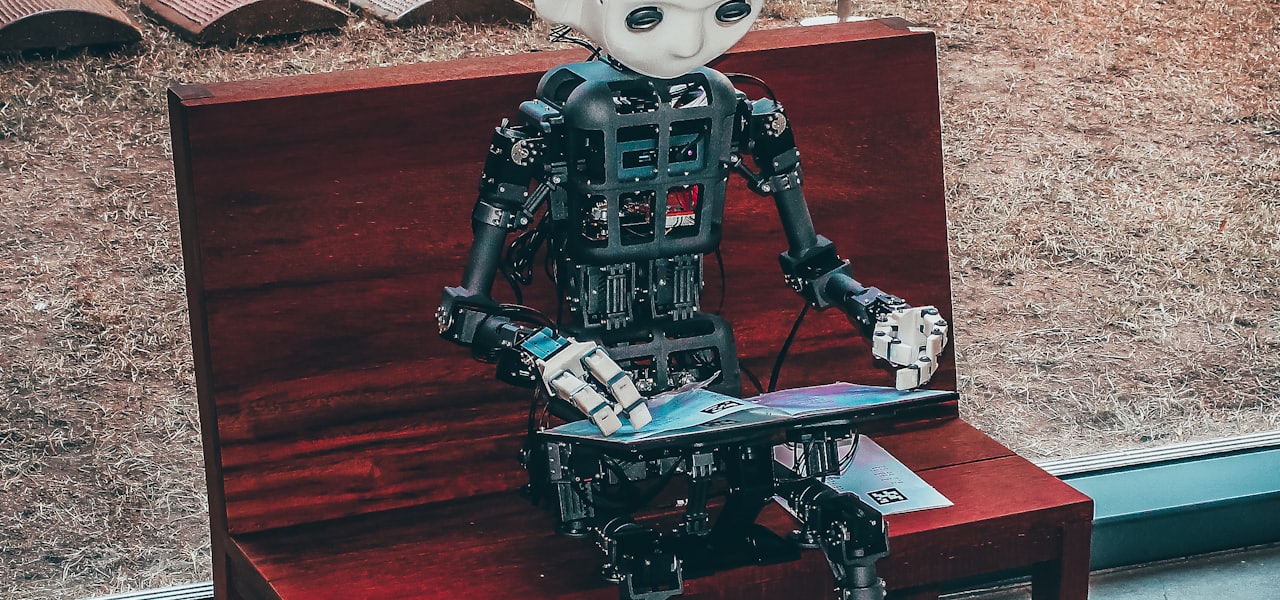
  • Emi Kusano

    Emi Kusano

    Emi Kusano (Japanese: 草野 絵美, Hepburn: Kusano Emi; born August 4, 1990) is a Tokyobased Japanese multidisciplinary artist known for creating photography, video, and installations using generative AI technology. Her work explores themes of nostalgia, pop culture, and collective memory. Her work explores themes of nostalgia, pop culture, and collective memory. She is recognized as one of the early practitioners of generative AI art. Her work has been exhibited at the 21st Century Museum of Contemporary Art, Kanazawa, and screened at the M+ Museum’s Asian Avant-Garde Film Festival. Additionally, she has participated in prestigious international art fairs, including Paris Photo and Art Basel Hong Kong. In 2025, she was named one of the World Economic Forum's Young Global Leaders. In 2026, she was selected as a fellow for the AI x Arts Fellowship at Mohamed bin Zayed University of Artificial Intelligence. Kusano serves as a part-time lecturer at the Tokyo University of the Arts and is the producer and vocalist for the Synthwave music unit, Satellite Young. == Early life == === Photography === Kusano was born and raised in Tokyo. Kusano's career began during her high school years before 2008 when she became involved in street fashion photography. Her photographs, primarily taken in Harajuku, were published on "Japanese Streets", "Metropolis", CNN's travel guide magazine "CNN GO","WGSN". Her photography was exhibited at the FIT Museum in New York and the Victoria and Albert Museum in London. == Career == === Music and Installation work === Since 2014, in collaboration with BelleMaison Sekine, Kusano has led "Satellite Young," a synthwave music unit s the lead vocalist, she sings about blending 1980s idol culture with lyrics that tackle contemporary issues such as planned obsolescence ("Sony Timer"), online dating, artificial intelligence, and social media. Their music, known for its conceptual depth, has earned international niche recognition. "Satellite Young" has participated in music festivals, including "South by Southwest," showcasing their unique fusion of retro aesthetics and modern critiques. In 2018, she was selected to participate in "Art Hack Day," an interdisciplinary art hackathon held at The National Museum of Emerging Science and Innovation. where she presented "Singing Dream," a karaoke machine endowed with artificial life, earning the Jury Prize. "Instababy Generator," a 2019 installation co-created with Junichi Yamaoka, explored the concept of designer babies and received recognition at the SIGGRAPH Art Gallery. In October 2020, operating under the name Emi Satellite, she debuted as a solo singer with her first single "Glass Ceiling," an empowerment anthem that addresses the challenges faced by women and encourages progress towards the future. The music video for this song features a direction where strong women rewrite the roles of protagonists in a Bishōjo game, a type of dating simulation game. This concept later served as a prototype for Shinsei Galverse. === Challenge for Blockchain Art === In 2021, she explored the financial world through her single "IPO" and entered the NFT space with "Love Is an IPO," her first NFT work on Ethereum, sold on Foundation. In April 2022, she co-founded the crowdfunded anime project "Shinsei Galverse" with Ayaka Ohira, Devin Mancuso, and Jack Baldwin. serving as one of the executive directors overseeing the creative direction and story. The project's NFT collection of 8,888 ranked #1 on OpenSea's "Top NFTs" for several days, marking one of Japan's first globally successful blockchain art projects. In 2023, Shinsei Galverse produced the official "I like u" music video by Grammy-nominated singer Tove Lo as an initial anime endeavor. Kusano also contributed to discussions on Web3.0 and blockchain technology as a panelist in seminars organized by the Digital Agency of Japan. === AI art === In May 2023, Kusano's first AI art collection "Neural Fad" depicting imaginary fashion history sold out 100 pieces within 24 hours at the "Bright Moments Tokyo" In June, she created WWDJAPAN's first AI-generated magazine cover using her own face. It is the first AI cover in Japanese fashion media. She was also appointed t to the Cultural Affairs Agency's Copyright Subcommittee, she participates in discussions on generative AI and copyright. Her "Synthetic Reflections" self-portrait series debuted on SuperRare, with the first piece auctioned for 3.5 ETH (equivalent to 6,480 US dollars at the time). In July 2023, she co-exhibited a 3D AI-generated dress at Christie's "Future Frequencies" auction with Gucci, alongside Claire Silver. In September, her 30-piece "Pixelated Perception" exhibit at Art Blocks Marfa explored 1990s media and gender, also showcased at the 21st Century Museum of Contemporary Art, Kanazawa. In December, her "Techno-Animism" AI art collection fused Japanese animism with technology. Collaborating with a U.S. gallery, she unveiled 336 pieces during a two-week Art Basel world tour. Throughout the two-week tour, she sold a total of 336 pieces, generating 11.2 ETH (equivalent to 21,264 US dollars at the time). === Generative art === In February 2024, the generative art platform Art Blocks selected the work "Melancholic Magical Maiden," for its Curated category. This piece reconstructs the aesthetics of 1990s magical girl anime, offering a critique of past anime heroines. It sold out within an hour, with all 300 pieces going for a total of 57 ETH (equivalent to approximately 215,385US dollars at the time). In April 2024, Emi Kusano spoke at the Standing Committee on Copyright and Other Rights at the World Intellectual Property Organization (WIPO) in Geneva, Switzerland, where she presented AI-specific information for discussion. == Style and technique == Kusano draws inspiration from Japanese retro-futurism as a foundation for her artwork, which explores the cutting-edge of technology. This approach is fueled by nostalgia for the pre-internet era, specifically the postwar period when Japanese mass media held significant sway. By blending modern technology with retro-culture, she captures the complex feelings of love, hate, and ambivalence towards present and future accelerationism. While at university, Kusano was profoundly influenced by Naoki Sakai, the industrial designer responsible for igniting the retro-futurism movement. In her musical project "Satellite Young", Kusano dons the persona of an '80s female idol and sings about contemporary technology. In her installation piece "Singing Dream", she investigates the concept of an artificial life form inhabiting a karaoke machine, which has been popular since the 1980s, compelling people to sing. In the collaborative NFT art project "Shinsei Galverse", Kusano reimagines a cyberpunk anime primarily featuring female characters, incorporating elements of magical girls popular in the early Heisei period. == Personal life == Kusano has two sons. In August 2021, she minted her older son Zombie Zoo Keeper's pixel art on "OpenSea" as part of his summer research project. The artwork was purchased by notable figures including Brud CEO Trevor McFedries and Steve Aoki, who bought the piece for the equivalent of 21.82 thousand US dollars, highlighting the intersection of art, technology, and family in her work.

    Read more →
  • Static program analysis

    Static program analysis

    In computer science, static program analysis (also known as static analysis or static simulation) is the analysis of computer programs performed without executing them, in contrast with dynamic program analysis, which is performed on programs during their execution in the integrated environment. The term is usually applied to analysis performed by an automated tool, with human analysis typically being called "program understanding", program comprehension, or code review. In the last of these, software inspection and software walkthroughs are also used. In most cases the analysis is performed on some version of a program's source code, and, in other cases, on some form of its object code. Two leading approaches to resource certification have been Static Analysis (SA) and Implicit Computational Complexity (ICC). SA is algorithmic in nature: it focuses on a broad programming language of choice, and seeks to determine by syntactic means whether given programs in that language are feasible. In contrast, ICC attempts to create from the outset specialized programming languages or methods that delineate a complexity class. Thus, SA's focus is on compile time, making no demand on the programmer; whereas ICC is a language-design discipline." The discipline of static analysis should not be confused with linting, which is the process of checking for coding style mistakes. == Rationale == The sophistication of the analysis performed by tools varies from those that only consider the behaviour of individual statements and declarations, to those that include the complete source code of a program in their analysis. The uses of the information obtained from the analysis vary from highlighting possible coding errors (e.g., the lint tool) to formal methods that mathematically prove properties about a given program (e.g., its behaviour matches that of its specification). Software metrics and reverse engineering can be described as forms of static analysis. Deriving software metrics and static analysis are increasingly deployed together, especially in creation of embedded systems, by defining so-called software quality objectives. A growing commercial use of static analysis is in the verification of properties of software used in safety-critical computer systems and locating potentially vulnerable code. For example, the following industries have identified the use of static code analysis as a means of improving the quality of increasingly sophisticated and complex software: Medical software: The US Food and Drug Administration (FDA) has identified the use of static analysis for medical devices. Nuclear software: In the UK the Office for Nuclear Regulation (ONR) recommends the use of static analysis on reactor protection systems. Aviation software (in combination with dynamic analysis). Automotive & Machines (functional safety features form an integral part of each automotive product development phase, ISO 26262, section 8). A study in 2012 by VDC Research reported that 28.7% of the embedded software engineers surveyed use static analysis tools and 39.7% expect to use them within 2 years. A study from 2010 found that 60% of the interviewed developers in European research projects made at least use of their basic IDE built-in static analyzers. However, only about 10% employed an additional other (and perhaps more advanced) analysis tool. In the application security industry the name static application security testing (SAST) is also used. SAST is an important part of Security Development Lifecycles (SDLs) such as the SDL defined by Microsoft and a common practice in software companies. == Tool types == The OMG (Object Management Group) published a study regarding the types of software analysis required for software quality measurement and assessment. This document on "How to Deliver Resilient, Secure, Efficient, and Easily Changed IT Systems in Line with CISQ Recommendations" describes three levels of software analysis. Unit Level Analysis that takes place within a specific program or subroutine, without connecting to the context of that program. Technology Level Analysis that takes into account interactions between unit programs to get a more holistic and semantic view of the overall program in order to find issues and avoid obvious false positives. System Level Analysis that takes into account the interactions between unit programs, but without being limited to one specific technology or programming language. A further level of software analysis can be defined. Mission/Business Level Analysis that takes into account the business/mission layer terms, rules and processes that are implemented within the software system for its operation as part of enterprise or program/mission layer activities. These elements are implemented without being limited to one specific technology or programming language and in many cases are distributed across multiple languages, but are statically extracted and analyzed for system understanding for mission assurance. == Formal methods == Formal methods is the term applied to the analysis of software (and computer hardware) whose results are obtained purely through the use of rigorous mathematical methods. The mathematical techniques used include denotational semantics, axiomatic semantics, operational semantics, and abstract interpretation. By a straightforward reduction to the halting problem, it is possible to prove that (for any Turing complete language), finding all possible run-time errors in an arbitrary program (or more generally any kind of violation of a specification on the final result of a program) is undecidable: there is no mechanical method that can always answer truthfully whether an arbitrary program may or may not exhibit runtime errors. This result dates from the works of Church, Gödel and Turing in the 1930s (see: Halting problem and Rice's theorem). As with many undecidable questions, one can still attempt to give useful approximate solutions. Some of the implementation techniques of formal static analysis include: Abstract interpretation, to model the effect that every statement has on the state of an abstract machine (i.e., it 'executes' the software based on the mathematical properties of each statement and declaration). This abstract machine over-approximates the behaviours of the system: the abstract system is thus made simpler to analyze, at the expense of incompleteness (not every property true of the original system is true of the abstract system). If properly done, though, abstract interpretation is sound (every property true of the abstract system can be mapped to a true property of the original system). Data-flow analysis, a lattice-based technique for gathering information about the possible set of values; Hoare logic, a formal system with a set of logical rules for reasoning rigorously about the correctness of computer programs. There is tool support for some programming languages (e.g., the SPARK programming language (a subset of Ada) and the Java Modeling Language—JML—using ESC/Java and ESC/Java2, Frama-C WP (weakest precondition) plugin for the C language extended with ACSL (ANSI/ISO C Specification Language) ). Model checking, considers systems that have finite state or may be reduced to finite state by abstraction; Symbolic execution, as used to derive mathematical expressions representing the value of mutated variables at particular points in the code. Nullable reference analysis == Data-driven static analysis == Data-driven static analysis leverages extensive codebases to infer coding rules and improve the accuracy of the analysis. For instance, one can use all Java open-source packages available on GitHub to learn good analysis strategies. The rule inference can use machine learning techniques. It is also possible to learn from a large amount of past fixes and warnings. == Remediation == Static analyzers produce warnings. For certain types of warnings, it is possible to design and implement automated remediation techniques. For example, Logozzo and Ball have proposed automated remediations for C# cccheck.

    Read more →
  • Xaitment

    Xaitment

    xaitment is a German-based company that develops and sells artificial intelligence (AI) software to video game developers and simulation developers. The company was founded in 2004 by Dr. Andreas Gerber, and is a spin-off of the German Research Centre for Artificial Intelligence, or DFKI. xaitment has its main office in Quierschied, Germany, and field offices in San Francisco and China. == Products == xaitment currently sells two AI software modules: xaitMap and xaitControl. xaitMap provides runtime libraries and graphical tools for navigation mesh generation (also called NavMesh generation), pathfinding, dynamic collision avoidance, and individual and crowd movement. xaitControl is a finite-state machine for game logic and character behavior modeling that also includes a real-time debugger. On January 11, 2012, xaitment announced that it making its source code for these modules available to "all current and future US and European licensees". On February 22, 2012 xaitment released two new plug-ins, xaitMap and xaitControl for the Unity Game Engine. The full versions are available for PC (Windows and Linux), PlayStation 3, Xbox 360 and Wii. The pathfinding plug-in is available with a Windows dev environment, but can deployed on iOS, Mac, Android and the Unity Web Player. == Partners == xaitment's AI software is currently integrated into the Unity game engine, Havok's Vision Engine, Bohemia Interactive's VBS2 Simulation Engine, GameBase's Gamebryo game engine. == Customers == xaitment sells its AI software products to video game developers and military and civil simulation developers. Current customers include Tencent, gamania, TML Studios, Emobi Games, IP Keys and others. A full list of customers can be found on xaitment's website.

    Read more →
  • Competitions and prizes in artificial intelligence

    Competitions and prizes in artificial intelligence

    There are a number of competitions and prizes to promote research in artificial intelligence. == General machine intelligence == The David E. Rumelhart Prize is an annual award for making a "significant contemporary contribution to the theoretical foundations of human cognition". The prize is $100,000. The Human-Competitive Award is an annual challenge started in 2004 to reward results "competitive with the work of creative and inventive humans". The prize is $10,000. Entries are required to use evolutionary computing. The Intel AI Global Impact Festival is an international annual competition held by Intel Corporation for school, and college students with prizes upwards of $15,000. It is about artificial intelligence technology. There are two age brackets in this competition, 13-18 Age Group, and 18 and Above Age Group. The IJCAI Award for Research Excellence is a biannual award given at the International Joint Conference on Artificial Intelligence (IJCAI) to researchers in artificial intelligence as a recognition of excellence of their career. The 2011 Federal Virtual World Challenge, advertised by The White House and sponsored by the U.S. Army Research Laboratory's Simulation and Training Technology Center, held a competition offering a total of US$52,000 in cash prize awards for general artificial intelligence applications, including "adaptive learning systems, intelligent conversational bots, adaptive behavior (objects or processes)" and more. The Machine Intelligence Prize is awarded annually by the British Computer Society for progress towards machine intelligence. The Kaggle – "the world's largest community of data scientists compete to solve most valuable problems". == Conversational behaviour == The Loebner prize is an annual competition to determine the best Turing test competitors. The winner is the computer system that, in the judges' opinions, demonstrates the "most human" conversational behaviour, they have an additional prize for a system that in their opinion passes a Turing test. This second prize has not yet been awarded. == Automatic control == === Pilotless aircraft === The International Aerial Robotics Competition is a long-running event begun in 1991 to advance the state of the art in fully autonomous air vehicles. This competition is restricted to university teams (although industry and governmental sponsorship of teams is allowed). Key to this event is the creation of flying robots which must complete complex missions without any human intervention. Successful entries are able to interpret their environment and make real-time decisions based only on a high-level mission directive (e.g., "find a particular target inside a building having certain characteristics which is among a group of buildings 3 kilometers from the aerial robot launch point"). In 2000, a $30,000 prize was awarded during the 3rd Mission (search and rescue), and in 2008, $80,000 in prize money was awarded at the conclusion of the 4th Mission (urban reconnaissance). === Driverless cars === The DARPA Grand Challenge is a series of competitions to promote driverless car technology, aimed at a congressional mandate stating that by 2015 one-third of the operational ground combat vehicles of the US Armed Forces should be unmanned. While the first race had no winner, the second awarded a $2 million prize for the autonomous navigation of a hundred-mile trail, using GPS, computers and a sophisticated array of sensors. In November 2007, DARPA introduced the DARPA Urban Challenge, a sixty-mile urban area race requiring vehicles to navigate through traffic. In November 2010 the US Armed Forces extended the competition with the $1.6 million prize Multi Autonomous Ground-robotic International Challenge to consider cooperation between multiple vehicles in a simulated-combat situation. Roborace will be a global motorsport championship with autonomously driving, electric vehicles. The series will be run as a support series during the Formula E championship for electric vehicles. This will be the first global championship for driverless cars. == Data-mining and prediction == The Netflix Prize was a competition for the best collaborative filtering algorithm that predicts user ratings for films, based on previous ratings. The competition was held by Netflix, an online DVD-rental service. The prize was $1,000,000. The Pittsburgh Brain Activity Interpretation Competition will reward analysis of fMRI data "to predict what individuals perceive and how they act and feel in a novel Virtual Reality world involving searching for and collecting objects, interpreting changing instructions, and avoiding a threatening dog." The prize in 2007 was $22,000. The Face Recognition Grand Challenge (May 2004 to March 2006) aimed to promote and advance face recognition technology. The American Meteorological Society's artificial intelligence competition involves learning a classifier to characterise precipitation based on meteorological analyses of environmental conditions and polarimetric radar data. == Cooperation and coordination == === Robot football === The RoboCup and Federation of International Robot-soccer Association (FIRA) are annual international robot soccer competitions. The International RoboCup Federation challenge is by 2050 "a team of fully autonomous humanoid robot soccer players shall win the soccer game, comply with the official rule of the FIFA, against the winner of the most recent World Cup." == Logic, reasoning and knowledge representation == The Herbrand Award is a prize given by Conference on Automated Deduction (CADE) Inc. to honour persons or groups for important contributions to the field of automated deduction. The prize is $1000. The CADE ATP System Competition (CASC) is a yearly competition of fully automated theorem provers for classical first order logic associated with the Conference on Automated Deduction (CADE) and International Joint Conference on Automated Reasoning (IJCAR). The competition was part of the Alan Turing Centenary Conference in 2012, with total prizes of 9000 GBP given by Google. The SUMO prize is an annual prize for the best open source ontology extension of the Suggested Upper Merged Ontology (SUMO), a formal theory of terms and logical definitions describing the world. The prize is $3000. The Hutter Prize for lossless compression of human knowledge is a cash prize which rewards compression improvements on a specific 100 MB English text file. The prize awards 500 euros for each one percent improvement, up to €50,000. The organizers believe that text compression and AI are equivalent problems and 3 prizes have been given, at around € 2k. The Cyc TPTP Challenge is a competition to develop reasoning methods for the Cyc comprehensive ontology and database of everyday common sense knowledge. The prize is 100 euros for "each winner of two related challenges". The Eternity II challenge was a constraint satisfaction problem very similar to the Tetravex game. The objective is to lay 256 tiles on a 16x16 grid while satisfying a number of constraints. The problem is known to be NP-complete. The prize was US$2,000,000. The competition ended in December 2010. == Games == The World Computer Chess Championship has been held since 1970. The International Computer Games Association continues to hold an annual Computer Olympiad which includes this event plus computer competitions for many other games. The Ing Prize was a substantial money prize attached to the World Computer Go Congress, starting from 1985 and expiring in 2000. It was a graduated set of handicap challenges against young professional players with increasing prizes as the handicap was lowered. At the time it expired in 2000, the unclaimed prize was 400,000 NT dollars for winning a 9-stone handicap match. The AAAI General Game Playing Competition is a competition to develop programs that are effective at general game playing. Given a definition of a game, the program must play it effectively without human intervention. Since the game is not known in advance the competitors cannot especially adapt their programs to a particular scenario. The prize in 2006 and 2007 was $10,000. The General Video Game AI Competition (GVGAI) poses the problem of creating artificial intelligence that can play a wide, and in principle unlimited, range of games. Concretely, it tackles the problem of devising an algorithm that is able to play any game it is given, even if the game is not known a priori. Additionally, the contests poses the challenge of creating level and rule generators for any game is given. This area of study can be seen as an approximation of General Artificial Intelligence, with very little room for game dependent heuristics. The competition runs yearly in different tracks: single player planning, two-player planning, single player learning, level and rule generation, and each track prizes ranging from 200 to 500 US dollars for winners and runner-ups. The 2007 Ultimate Computer Ches

    Read more →